Effect of Worn Mixer Blades on Energy Costs | OMMIX
The Impact of Worn Mixer Blades on Factory Energy Costs
In an industrial PVC production facility, extruder heaters and turbo mixers powered by massive asynchronous motors constitute the largest component of the electricity bill. Factory managers often view mixer blades as mere masses of iron that only need to be replaced when they physically break or shatter. However, the impact of worn mixer blades on the factory's energy costs is hidden in the amount of energy the machine consumes in kilowatts.
A blade that has lost its aerodynamic structure and whose edges have become blunt (dull) due to calcite friction, instead of mixing PVC powder and fillers by sliding them through the air (creating a vortex), tries to push them with brute force, almost like a bulldozer. This mechanical resistance applies an enormous counter-torque (counterload) to the motor rotor.

Spikes in Motor Current and Power Factor (Cos φ)
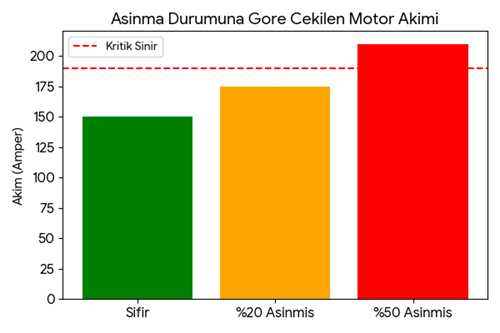
As engineers with experience in automation and electrical maintenance know very well (and this is confirmed by data from systems like the Siemens S7-1200), if a motor draws, for example, 150 Amps while rotating an ideal blade, a dull blade can draw up to 200 Amps to rotate the same mass. This 30% current increase is directly reflected in your active power consumption.
Not only the active power, but also the motor overheats when it is constantly forced to operate at peak load (full load). The energy quality on the main supply line decreases. Your automatic compensation panel constantly switches on and off to balance the increased reactive load. The contacts of the contactors in the panel wear out, and the life of the capacitors is shortened. While you think you are saving money by avoiding replacing a worn blade, you end up paying much more in reactive penalties or burnt-out panel switchgear.
|
Knife Condition |
Current Drawn (Example 200kW) |
Mixing Time |
Estimated Monthly Energy Loss |
|
Zero Blade (Optimum) |
~140 A - 160 A |
7-8 minutes |
Reference (0% Loss) |
|
20% Worn Blade |
~170 A - 180 A |
11-12 minutes |
+15% More Consumption |
|
50% Blunt Blade |
~210 A (Overload) |
17-18 minutes |
+40% More Consumption |
Production Downtime and Hidden Costs
The cost of a worn blade isn't just reflected in your electricity bill. Increasing mixing time from 10 minutes to 16 minutes means a mixer that produces 6 batches per hour will only produce 3.5 batches per hour. Your extruder lines will have to wait for raw materials. The factory's daily tonnage capacity will decrease.
Furthermore, motor overheating leads to insufficient cooling fans and causes thermal relays (or driver parameters) to frequently shut down the system to protect the motor (tripping). Every minute production stops costs the factory thousands of liras. The main source of all this electrical and mechanical stress is cheap mixer impellers that are not replaced in time or are made of the wrong material (uncoated).

ROI (Return on Investment) Calculation
When you purchase a blade set with tungsten carbide armor or precise aerodynamic angles manufactured by OMMIX, the initial investment cost may seem high. However, when you factor in the reduction in energy consumption, the increase in capacity, and the extended lifespan of the board, the blade more than pays for itself in a short period of 2-3 months (ROI) in most facilities.
|
Cost Item |
Worn Blade Operation (Monthly) |
New OMMIX Blade Operation (Monthly) |
|
Active Electricity Consumption |
Very High (Amperage peaks) |
Nominal and Balanced |
|
Maintenance/Panel Failures |
Frequent contactor and thermal switch replacements. |
Minimum switchgear fatigue. |
|
Total Charge Generated |
Average of 80 charges per day. |
Average of 120 charges per day (Time saving) |
To discover what the main substance is that increases motor currents so much and melts the blades like sandpaper, you can read our review titled "The Effect of High Calcite Content on PVC Mixer Blade Life ."
Frequently Asked Questions
Does blade wear really affect the electricity bill that much?
Absolutely. An increase in current (Amperes) of up to 30% and a longer mixing time directly increases kW/h (active energy) consumption.
In inverter-driven motors, can an increase in current damage the motor?
Inverters reduce the speed of the motor when the current limit is reached (torque limit) to protect it. This protects the motor, but then the mixer doesn't reach sufficient speed, the mixture doesn't heat up, and the process stalls.
Why is the compensation panel affected by the mixer?
Asynchronous motors draw significant reactive (inductive) power during startup and under overload. When the blades wear out, the motor is constantly stressed, disrupting the reactive power balance and causing the switchboard to trip more frequently.
How can we measure energy consumption?
You can make comparisons by noting the maximum amperage drawn per charge from the motor driver's display, the energy analyzer, or the current trend page on your PLC panel.
Could the mixer shutting down (thermal tripping) be due to the blade?
Yes, a strained motor draws excessive current. The thermal relay (or motor protection switch) cuts off the circuit to prevent the motor from burning out. This happens very frequently when the blades become dull.
What is the average ROI (Return on Investment) period for a new knife?
Thanks to the energy savings it provides and the increased daily production capacity (tonnage), a high-quality knife set pays for itself in an average of 2-4 months.
To reduce your facility's electricity bills and maintain your reactive/active power balance, consider the streamlined OMMIX mixer blades .