Effect of Impeller Design on PVC Mixing Time
The Effect of Propeller Design on PVC Mixing Time and Quality
The goal when preparing PVC mixtures is not simply to mix raw materials together, but to open the pores of the resin particles with the help of heat and trap liquid/solid additives in these pores. The heart of this physical reaction is the "vortex" structure inside the mixing tank. The effect of the impeller design on the PVC mixing time and quality is directly related to how perfectly this vortex is created.
Imagine the funnel that forms when you stir sugar in a teacup. A PVC mixer aims for exactly this funnel structure. The material must climb up the sides of the bowl, curve without hitting the lid, and pour back into the center (the hub of the blades). The fact that this cycle occurs flawlessly, multiple times per second, depends on the pitch angle and surface area of the blades.

Angles of Attack and Shear Force
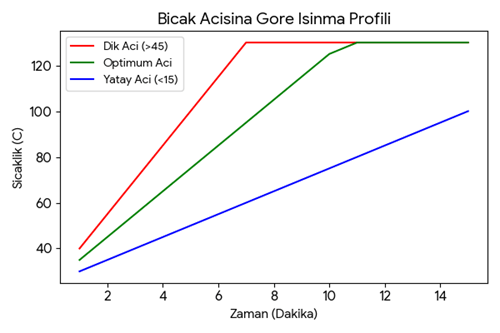
The angle the propeller makes with the horizontal plane determines how quickly the material heats up. If the angle is too steep, the blade hits the material like a wall. This creates enormous shear force, causing the material to heat up very quickly, but also pushing the motor current to dangerous limits. Furthermore, excessive shear force can cause the polymer chains to break, leading to degradation of the material's molecular structure.
If the angle is too low (horizontal), the blade will only slide the material underneath instead of cutting it. The current remains too low, the motor runs smoothly, but the material will struggle to reach 120°C in 20 minutes instead of the required 10 minutes. This reduces the tonnage the factory can produce in a single day's shift by half. OMMIX designs optimum blade angles that strike this delicate balance between motor power and mixing time.
|
Blade Angle Characteristic |
Heating Rate (Friction) |
Motor Load (Amperes) |
Mixture Quality (Homogeneity) |
|
Very Right Angle (>45 Degrees) |
Very fast |
Extremely High (Risk) |
Low (risk of clumping) |
|
Optimum OMMIX Angle |
Fast and Balanced |
Nominal (Savings) |
Very High (Completely homogeneous) |
|
Low/Horizontal Angle (<15 Degrees) |
Very Slow |
Low |
There is a risk of stratification. |
Gap (Tolerance) Between the Hob and the Blade
One of the most crucial aspects of impeller design is the distance of the tip from the drum wall and bottom. A very fine tolerance, typically 1-1.5 mm, is usually left between the bottom scraper blade and the drum bottom. If this distance is incorrectly designed (or if it increases due to blade wear), the PVC powder remaining at the bottom cannot be drawn into the vortex.
This layer of material, which does not circulate, is essentially baked and burned by the heat of the rotating material above. It mixes into the finished profile or pipe as black spots, causing significant quality rejection (waste). From a machine manufacturing and automation perspective, design is not just a stylish 3D drawing on a computer screen; it must be compatible with the realities of mechanics and the field (vibration, thermal expansion).

The Contribution of Design to Process Quality
In a mixer equipped with the correct impellers, all the formula components (stabilizer, lubricant, titanium, calcite) penetrate the PVC molecule evenly. This ensures stable melt flow in the extruder line, prevents pressure fluctuations at the mold exit, and maximizes the impact strength of the final product.
|
Design flaw |
The result in the mixer |
Its Effect on the Extrusion Line |
|
Faulty Deflector (Upper) Blade |
The material splashes onto the lid and the center empties. |
The resin additives cannot be absorbed and cause gas to form in the mold. |
|
Oversized Medium Blade |
The motor is overloaded, and the material is crushed. |
The melt temperature becomes unstable, causing the pipe/profile to crack. |
|
Excessive Space in the Lower Blade |
The material remains at the bottom of the pot and burns. |
Black spots/burn marks appear on the profile surface. |
, continue reading our guide, Considerations When Choosing PVC Mixer Blades, to learn what to look for when purchasing a new blade for your facility .
Frequently Asked Questions
Can we change the blade angle ourselves?
No, mixer blades are welded at a specific angle, and their dynamic balance is adjusted according to that angle. Physically interfering with the angle will disrupt the balance and damage the bearings.
What is the ideal mixing time?
Depending on boiler capacity, formulation, and cooling line, hot mixing typically takes 7-12 minutes. With proper design, this time can be standardized.
Should the impeller diameter be exactly flush with the boiler?
Absolutely not. Steel expands at high temperatures. If zero clearance is left, the blade will stretch and rub against the boiler wall when heated, leading to serious accidents. Tolerance is left by calculating the expansion allowance.
Does the design have a direct impact on engine fuel consumption?
Absolutely. A design that ensures low aerodynamic drag and fluid material flow can reduce the engine's active power consumption (kW) by up to 30%.
What happens if there is no deflector blade?
Flow towards the vortex center is not possible, the material is piled outwards by centrifugal force, a void forms in the center, and homogeneous heat transfer does not occur.
Does OMMIX design blades according to special formulas?
Yes, we design impellers with different flow dynamics for each of the following formulas: rigid PVC, soft PVC, and very high calcite.
Introducing OMMIX mixer blades, engineering marvels designed to fit your mixer perfectly, shortening your production time and improving product quality .