Hygienic Dosing and Stainless Design in the Food Sector
Stainless Steel and Hygienic Design Requirements Specifically for the Food Industry in Dosing Systems
In the food supplement, sports powder, industrial seasoning, bakery mix, infant formula, and chocolate industries, raw material dosing systems and weighing bunkers are at the very heart of production processes that directly affect human health. Therefore, these critical pieces of equipment used in food processing lines cannot be evaluated solely on the basis of engineering achievements such as precise weighing and production acceleration.
When it comes to human health, dosing machines are subject to strict global hygiene regulations (FDA certifications for America, EHEDG certifications for Europe, and GMP - Good Manufacturing Practices valid worldwide). Machines used in this sector must not contain any physical manufacturing defects that could create a breeding ground for bacteria (salmonella, E-coli, etc.) or mold, and must have a flawless metallurgical design that completely rejects cross-contamination (allergen contamination).
Metallurgical Material Selection: Why Should SS316L or SS304 Be Used?

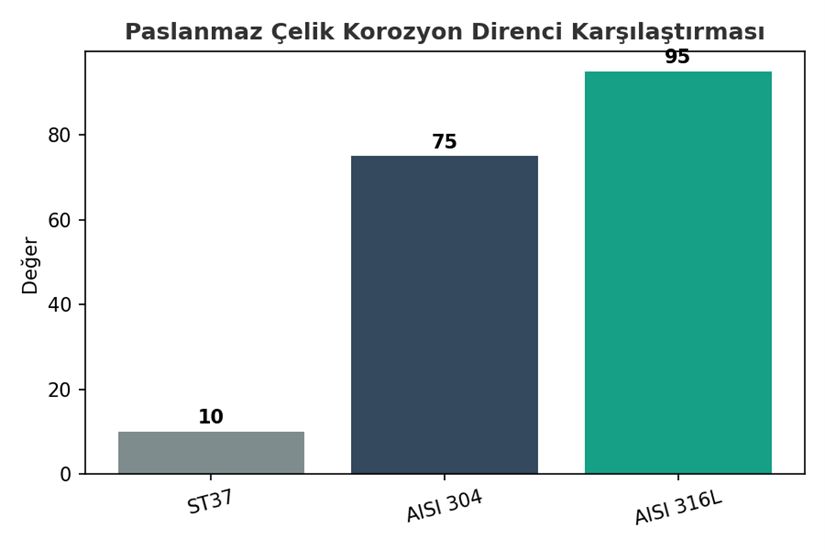
Every surface inside the machine that comes into direct (or indirect) contact with powder, granules, or liquid food, and is susceptible to wear, must be made of austenitic stainless steel, which offers extra resistance to corrosion (rusting) and the acidic/salty components of food. Standard carbon steels, often epoxy-painted and used in substandard production, will rust at the micro level over time, peel off the paint, and contaminate the product with heavy metals, thus endangering human health.
Chlorine and Acid Resistance Factor: 316L
While AISI 304 grade stainless steel is technically sufficient for dry (low corrosion risk) environments such as flour, starch, or sugar, the use of AISI 316L (low carbon, weldable) stainless steel, which has much higher corrosion resistance and molybdenum content, is a legal requirement for harsh environments such as tomato paste, salty sauces, dairy products (containing lactic acid), or exposure to highly chlorinated chemicals during cleaning.
|
Class of Materials Used |
Metallurgical Properties and Strength |
Applications in Industrial Food Production |
|
AISI 304 Stainless Steel |
Standard level corrosion resistance, reasonable processing cost. |
Flour, cocoa, sugar, dried cereals, dried granulated food supplements. |
|
AISI 316L Stainless Steel |
Extra high corrosion resistance, complete chemical resistance to salts and acidic acids. |
Salty sauces, pasteurized dairy products, additives containing citric acid, fruit concentrates. |
|
Food-grade silicone/Teflon |
Elastic flexibility, odorless/non-emitting, high mechanical sealing. |
Vibration-absorbing flexible fabric bellows, silo gaskets, valve sealing O-rings. |
The Secret of Mechanical Design: Dead Leg Elimination and Surface Roughness (Ra)

From an engineering perspective, the golden rule of hygienic design is that absolutely no area of the machine should contain sharp 90-degree corners, recesses, dead legs, or uncleaned hard welding burrs where liquid or powder products could remain, settle, or adhere during washing. The points where the helical blades connect to the shaft must have smooth curves.
To physically prevent bacteria from adhering to the surface, the polishing level of the inner surfaces must be extremely fine, like a mirror (European standards require Ra < 0.8 microns), and the argon (TIG) weld seams during assembly must be smoothed with special sandpaper to completely eliminate the weld mark. Screw or bolt threads should never be used in direct contact with the material at the joints (as food could get trapped between the threads).
CIP (Clean-in-Place) - Compatible Equipment for On-Site Washing
In large food processing plants or sensitive pharmaceutical factories that process tons of products, it is not possible to detach the entire machine from its platform and send it for cleaning every time an allergen, color, or recipe changes; this would reduce production efficiency to zero. Thanks to stainless steel cleaning spray balls (spray balls/nozzles) pre-integrated into the system's own housing through engineering calculations, the device should be able to clean its own interior without manual intervention using high-temperature alkaline or acidic waters and sterilization fluids (this is called CIP technology).
Electronic sensors must be washable (IP69K).
During this intense washing process, it is absolutely essential that the motors surrounding the machine and the sensitive loadcell (weighing sensors) units, which are the brain of the device, withstand these extremely high-pressure and boiling waters (approximately 80-90°C and 100 bar pressure). Sensors and control panels to be used in the food industry must be selected from armored models with a minimum IP69K protection standard (high-level pressure and hot water impermeability).
|
Mechanical Design Criteria |
Standard (Industrial) Design Difference |
Special Hygienic (Food/Pharmaceutical Grade) Design Rule |
|
Metal Welding Work |
The standard seam weld is left as is, with a black weld mark visible. |
Sanded and ground both inside and out, resulting in a smooth, seamless look with no welding marks. |
|
Sealing Gaskets and O-rings |
Standard NBR (Nitrile) or rubber (Black) |
Blue-colored (so that if a piece breaks off, it can be easily detected in food) FDA-approved Blue Silicone, EPDM, or Teflon. |
|
Motor, Fan and Gearbox Housing |
Open impeller guarded aluminum die-cast housing (cooling ducts would fill with dust) |
Hygienic, closed, flat housing with a smooth stainless steel casing that prevents dust/water accumulation (IP69K) |
Frequently Asked Questions
What exactly does the phrase 'FDA Approved' mean in machine documentation?
The goal is to fully comply with international health standards set by the U.S. Food and Drug Administration (FDA), which prove that industrial machine parts (especially plastic, rubber, or metal surfaces) are suitable for contact with food and do not release (migrate) toxic chemicals or microplastics into the food at high temperatures.
Food processing machinery's interior surfaces must be made of stainless steel, but does its exterior casing (chassis) also have to be made of stainless steel?
According to standards, the interior area that comes into contact with food is mandatory, but ideally and for a long lifespan, the machine's outer chassis should also be made of stainless steel (at least SS304). Since the plant floor is washed several times a day with pressurized water and chemicals, carbon steel (painted) chassis can peel and rust, releasing mold and rust (breeding grounds for bacteria) into the plant air.
What is the IP69K industrial protection rating for control panels and motors?
This is a demanding German industrial insulation test standard that specifies that the system's electrical panel, HMI displays, cable glands, and most importantly, load cell sensors must be completely sealed against aggressive cleaning water at very high temperatures (typically 80°C) and very high pressures (up to 100 bar at close range), without a single drop of water ingress.
Why is surface roughness (Ra value) so crucial in food processing for stainless steel?
A sheet metal surface that appears smooth and even to the naked eye is like mountains and valleys under a microscope. These microscopic pits are ideal dark areas for bacteria, spores, and old organic matter to nest and multiply (form biofilms). The smoother the surface (Ra < 0.8), the easier and more effective the washing water is for rinsing and sterilization.
How is lubrication performed on moving parts (gearboxes/bearings) in food processing systems?
Standard machine oil cannot be used in gearboxes and exposed bearings due to the possibility of even the slightest seal failure or leakage. Absolutely only non-toxic, food-grade (food-grade H1 certified) synthetic mineral oils or synthetic greases that do not harm human health even if accidentally contaminated with food must be used.
Could the technician's repeated disassembly and reassembly of the machine for cleaning damage the sensitive loadcell (weighing) sensor over time?
In heavy machinery where nuts are constantly tightened and loosened for cleaning, and where heavy tools are used, mechanical shock can occur and the sensor can bend. To prevent this, special quick-release V-band clamps that can be opened without tools are used in food processing machinery, ensuring both workplace safety and minimizing the sensor's risk.
To explore fully automated mixing processes in the non-food heavy industry and construction sectors, you can refer to our guide on the application of dosing systems to construction chemicals .
For customized powder dosing systems for your factory and all the necessary technical information, please review our Dosing Systems product.