The Role of Dosing Devices in Plastic Extrusion
How do dosing devices affect production quality in plastic extrusion lines?
In modern extrusion lines producing plastic packaging, PVC pipes, window profiles, medical films, or technical injection molded parts, even the slightest fluctuation (at milligram levels) in the raw material flow entering the system can cause the final product to fail mechanical tests, result in dangerous variations in wall thickness (microns), or cause noticeable aesthetic discoloration (marbling). Flawless operation of dosing units is essential to maintaining the profitability and reputation of the facilities.
The precise and continuous mixing of the main raw material, the natural polymer (PE, PP, PVC), the color-giving masterbatch granules that give the product its life, and other chemical additives that provide strength/flexibility, in the throat of the extruder just before they transition to the melt phase is a crucial engineering requirement. This is where advanced multi-component gravimetric dosing devices come into play.
Aggressive Cost Optimization in Masterbatch Dye Application

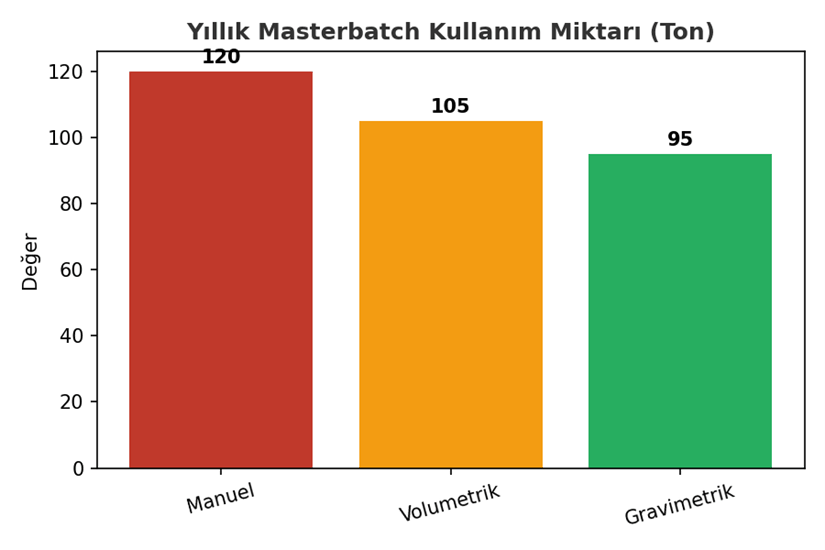
In plastic production, masterbatch (concentrated dyes and preservatives) are the smallest component in terms of quantity but the most expensive per kilogram. In traditional plants, where operators mix manually (with paddles) or use old, uncalibrated volumetric systems for dosing, more dye than required in the recipe is often used (over-dosing) to 'play it safe' for fear of not achieving the correct color tone.
Annual Savings and Depreciation
Thanks to advanced gravimetric dosing devices and loadcell automation, the dye or UV additive ratio can be controlled with precision down to 0.5%, even if the density of the main raw material changes. In a factory that consumes hundreds of tons of masterbatch annually, even a 1% saving in dye ratio can result in a huge economic benefit (savings) of hundreds of thousands of dollars in the company's annual raw material costs.
|
Type of Plastic Raw Material Used |
Intended Use in the Final Product |
Dosage Criticality and Risk in the System |
|
Main Natural Polymer (PE/PP/PVC) |
The main body and building block of the final plastic product. |
A stable, uninterrupted mass flow suitable for the extruder screw capacity must be ensured. |
|
Masterbatch (Color Granules) |
Aesthetic coloring, UV protection, anti-slip properties. |
Because the input is at very low rates (between 1% and 3%), it must be delivered with exceptionally high motor/weighing accuracy. |
|
Regrind (Burnt Material Debris) |
Recycling the factory's own waste reduces costs. |
Because bulk density (due to irregular shape) is constantly variable, it must be weighed gravimetrically and exclusively. |
Engineering Challenges of Using Regrind/Crudge

Due to modern environmental sustainability regulations and increasing polymer cost pressures, almost all plastic production lines re-feed 10% to 30% of their waste (scraping material) back into the extruder instead of discarding it into the environment. However, because the asymmetrical geometry of the scrap coming out of the crushing machine is extremely irregular, sometimes filamentous, sometimes angular, its fluidity in the silo is close to zero.
It is essential to prevent these recycled asymmetrical materials from forming knots (bridges) in the bunker and halting the feed. If the machine is to dose broken material, it must have special wide-pitch augers and intensive mechanical agitators in the bunker. Otherwise, the machine will trigger an alarm and shut down the system.
Meter/Gram (Yield Control) Stabilization and Consistent Wall Thickness
A classic dosing device simply weighs the material inside, but the new generation of advanced dosing automation not only weighs the raw materials but also communicates second-by-second with the main drive motor of the factory's extruder and the speed of the rollers pulling the line. Thanks to this technology, called 'grams per meter' (Yield Control), even if the operator suddenly increases or decreases the speed of the extruder line, the weight (and wall thickness) of the produced pipe or film per unit length is corrected by the PLC and always remains perfectly constant.
|
Operational Problem on the Line |
Serious Impact on Plastic Products |
Automation and Dosing Solution |
|
Excessive Dye or Additive Dosage |
Unnecessarily high production costs, chemical weakening of the plastic product. |
Precise gravimetric weighing and PLC proportional valve control. |
|
Insufficient or Uneven Paint Dosage |
The product may have zebra markings (striations, ripples), or faded or dull colors. |
Specially designed micro-screw configuration and static electricity grounding. |
|
Extruder Main Screw Pressure Fluctuation |
Fatal deviations in plastic pipe/film wall thickness (quality control rejection) |
Loss-in-weight technology ensures continuous and even raw material feeding to the main throat. |
Frequently Asked Questions
Why is the gravimetric (bulk) system particularly advantageous compared to the volumetric system in plastic extrusion production?
Gravimetric weighing is essential for accurately proportioning irregularly shaped materials like regrind, whose density changes second by second inside the tube, minimizing waste, and providing a precise, second-to-second report of exactly how many kilograms of molten material the extruder is drawing.
Should the dosing machine unit be installed on the throat of the main machine or at the edge of the ground?
In the plastics industry, if possible, the mixture should be mounted directly to the chassis of the main feed throat of the injection molding or extruder. This ensures that the mixture prepared above is poured instantly into the main melt screw without segregation due to vibration while traveling through the tubes.
Why are antistatic protection and precautions so necessary in plastic dosing?
Because plastic granules are dielectric, they accumulate excessive static electricity due to friction during transport. This charge causes light paint powders to adhere to the steel walls of the machine like magnets, preventing them from entering the formula. Perfect grounding of the machine is essential.
Could the 120°C raw materials coming from the main dryer damage the mechanics of the dosing machine?
Standard aluminum loadcell sensors experience reading deviation and can be damaged at temperatures above 80°C. If the raw material, such as PET or PC, is excessively hot coming from the dryer, special cooling shields and Teflon/silicone heat barriers (gaskets) should be used to protect the sensors.
How are broken recycled material and original natural polymer dosed simultaneously, in the same station?
Thanks to multi-component (gravimetric blender) systems, the main raw material, crushed stone, and dye are sequentially poured from separate weighing bunkers into the same main mixing drum via PLC-controlled sequence, and then sent to the throat of the extruder.
How does the automation control panel of the dosing device communicate industrially with the main speed of the extruder?
In older systems, synchronization was achieved via 0-10V or 4-20mA analog signal (tachogenerator) cables, while in modern factories, it is accomplished through real-time data exchange (handshake) between machine PLCs using high-speed industrial communication protocols (Profinet, EtherCAT, Modbus TCP).
After discussing industrial solutions, you can review our content on the Application of Dosing Systems to the Food Sector to learn about the strict hygiene standards and sanitation rules in food production lines .
For customized powder dosing systems for your factory and all the necessary technical information, please review our Dosing Systems product.