Circular Screen Chassis Design and Sealing Gasket Selection | OMMIX
Material (AISI 304/316) and Sealing Selection in Circular Screen Frame Design
The mechanical life of circular vibrating screens and the hygiene standards of the screened product are directly dependent on the steel alloy and sealing elements used in the machine's chassis design. These chassis, operating under dynamic vibration, can quickly suffer fatigue fractures, corrosion, or seal failures if the correct materials are not selected. For an analysis of the chassis weight's response to motor angles, please refer to our article on Circular Screen Vibration Motor Weight Angle Adjustment .
Stainless Steel Selection: A Comparison of AISI 304 and AISI 316
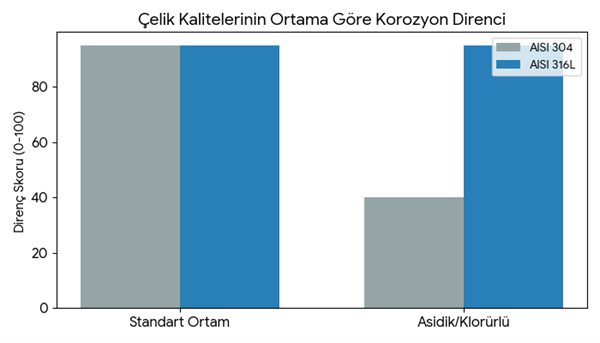
Industrial sieve manufacturing primarily uses stainless steel derivatives. The two main grades, AISI 304 and AISI 316L, differ in their chemical composition.
• AISI 304 Grade: Contains an average of 18% chromium and 8% nickel. It is the most preferred type of stainless steel in the food, plastics, and standard chemical industries. It has very high corrosion resistance.
• AISI 316 Grade: In addition to the 304 grade, it contains 2-3% Molybdenum (Mo). Molybdenum significantly increases the steel's resistance to chlorides (salty environments) and acidic chemicals.

The strength of the chassis material becomes even more critical as the number of sieve layers increases. For information on the design pressures of multi-layer systems, see our article on Circular Sieve Capacity Calculation and Layer Selection .
|
Feature |
AISI 304 Stainless Steel |
AISI 316 / 316L Stainless Steel |
|
Corrosion Resistance |
High (Standard Environments) |
Very High (Chloride and Acidic Environments) |
|
Basic Use |
Flour, Sugar, Plastic Granules, Legumes |
Pharmaceutical Industry, Salt, Fertilizer, Acidic Chemicals |
|
Cost |
Standard (More Economical) |
High (+25-30%) |
|
Surface Treatment |
Sandblasting, Satin Finish, Mirror Polishing |
Electro-Polishing, Pharmaceutical Mirror Polishing |
Sealing Gasket Selection Criteria
U- or V-type gaskets placed between chassis layers (deck) prevent material leakage and isolate vibration. Incorrect gasket selection can lead to material leakage, odor emission, and chemical dissolution of the gasket. Special gaskets are also required for the insulation of anti-clogging ultrasonic systems. For cleaning systems where these gaskets work synchronously, see the article "Preventing Mesh Clogging: Ultrasonic and Bouncing Ball Systems" .

|
Gasket Material |
Heat Resistance |
Features and Application Areas |
|
Silicone (FDA) |
-60°C / +200°C |
It is highly flexible and non-toxic. It is indispensable for the food and pharmaceutical industries. |
|
EPDM |
-40°C / +140°C |
Ozone exhibits excellent resistance to water, steam, and alkaline chemicals. |
|
NBR (Nitrile) |
-30°C / +100°C |
It exhibits the highest resistance to machine oils, fuels, and greases. |
|
Viton (FKM) |
-20°C / +250°C |
This type is used for high temperatures and aggressive chemical solvents. |
Frequently Asked Questions
1. Which ingredients should I choose for the food industry?
It is mandatory that the product be manufactured from at least AISI 304 grade stainless steel and that FDA (Food and Drug Administration) approved white or clear silicone gaskets be used for sealing.
2. Does using AISI 316 affect capacity?
No, whether the material is 304 or 316 does not affect capacity. It determines chassis lifespan, corrosion resistance, and hygiene standards.
3. If dust is leaking out of the sieve, what is the reason?
Dust leakage is usually caused by loosening of the chassis clamps or wear and tear of the sealing gasket (silicone/EPDM) between them.
4. Why is surface roughness (Ra value) important?
In the pharmaceutical and food industries, micro-scratches on surfaces must be absent to prevent bacterial growth. Therefore, interior surfaces should be polished to a Ra < 0.4 micron level (mirror polishing).
5. Why isn't the chassis made of carbon steel (CDC)?
Ordinary painted steel sheet will shed its paint under intense vibration, contaminating the product with rust and paint residue.
Does your process involve abrasive chemicals, or are you seeking the highest level of pharmaceutical hygiene? With OMMIX's AISI 304 and 316L circular sieve models, joined by fully automated argon welding and guaranteed 100% leak-proof, ensure years of trouble-free production. For your inquiries and project consulting, contact us immediately via www.ommix.com.tr. For expert support with capacity calculations and to examine our products in detail, please visit our Circular Sieve product page .